


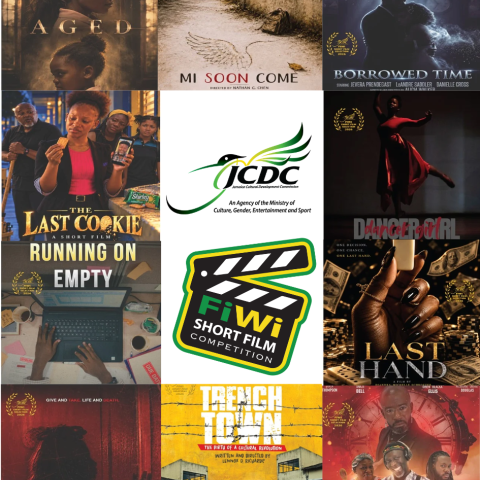
KINGSTON, Jamaica – Ten emerging Jamaican filmmakers are putting their creativity and storytelling skills on display in the 2026 FiWi Short Film Competition, using cinema to tackle issues ranging from instant gratification and grief to workplace burnout, childhood experiences and the cultural legacy of Trench Town.
Organised by the Jamaica Cultural Development Commission (JCDC), the competition showcases a diverse collection of films spanning drama, comedy, science fiction, horror and documentary, highlighting the depth of creative talent and the growing potential of Jamaica's next generation of filmmakers.
The films demonstrate the imagination, creativity and diversity of storytelling among Jamaica's emerging filmmaking talent, and span drama, comedy, science fiction, horror and documentary.
For the filmmakers, the competition represents an opportunity not only to showcase their creative abilities but also to tell stories that resonate, provoke thought and contribute to the preservation and development of Jamaican storytelling.
The ten films are available for viewing on the JCDC's YouTube channel. The 2026 FiWi Short Film Competition Awards Ceremony will be held on November 26, when the finalists will be recognised for their creative achievements and the winners announced.
Among the films is Borrowed Time by Alicia Walker, inspired by the Jamaican proverb, “Wha sweet Nanny goat a guh run him belly.” Walker uses the concept of time as currency to examine the dangerous attraction of instant gratification, posing a thought-provoking question: if people could exchange years of their lives for money, how much would they be willing to sacrifice?
A similarly imaginative exploration of life's difficult realities comes through in Cleveland O. McLeish's The Last Cookie.
McLeish combines the possibility of having a wish granted with the painful reality of losing a loved one. The Last Cookie explores the desire to undo the past, particularly the loss of someone dear, and the emotional complexities surrounding death and the wish for a second chance.
For Ricardo Anderson, filmmaking provided an opportunity to examine a deeply personal question: What does it mean to live a life of purpose? His film, The Day Off, draws from his own decision to leave the conventional career path after graduating from university with a degree in civil engineering, choosing instead to pursue his passion for the arts and establish his own creative business.Anderson brings this personal reflection to life through an imaginative storyline in which death takes a day off, bringing two contrasting approaches to work into focus: the traditional pursuit of employment and financial security, and a purpose-driven existence centred around people and meaningful contributions.
Exploring a different dimension of human vulnerability is Gillian Wisdom's Reciprocity, a science fiction and horror production inspired by the idea of an enchanted artefact capable of granting wishes, but always demanding something in return.
“I developed the concept after watching a social media video encouraging people to write down their desires as a means of manifesting them. This prompted me to consider the consequences of an object that could fulfil any wish, particularly for someone grieving the loss of a loved one. The film examines how grief and desperation can cloud judgement and lead people to overlook the consequences of getting what they desire,” Wisdom shared.
Workplace pressures and their impact on personal well-being are explored in Marissa Hepburn's Running on Empty. Drawing on personal experiences, social media accounts of workplace burnout and research into toxic work environments, Hepburn developed a character whose outward appearance of professional success masks an internal struggle.
Through Michael Blake, a young professional navigating demanding workplace expectations and strained personal relationships, the film highlights the warning signs of burnout, including chronic exhaustion, withdrawal from loved ones, loss of motivation and sleep disturbances. Hepburn hopes the film will encourage audiences to recognise these signs, seek professional assistance when necessary.
Childhood curiosity and the importance of learning from experience provide the foundation for Terron Mitchell's AGED. Drawing on the familiar experiences of growing up and the natural desire of children to explore, Mitchell developed a story that audiences can connect with through their own childhood memories.
Meanwhile, Jayda Pitter brings youthful ambition, family relationships and Jamaican dance culture together in Dancer Girl. Initially conceived as a story about teenage rebellion and a young girl resisting her father's expectations, the narrative evolved to present a more supportive family dynamic.
Pitter wanted to offer a positive representation of parental support for young people pursuing careers in the arts. Inspired by films centred on adolescent girls forging their own paths, she incorporated the energy and excitement of a competition, drawing on Jamaica's own dance culture.
Jamaica's cultural heritage takes centre stage in the lone documentary in this year’s competition, Lennox Richards' Trench Town: The Birth of a Cultural Revolution. The film examines how a community often associated with poverty, violence and political divisions became one of the most influential cultural centres in Jamaica and the wider world.While Trench Town is widely recognised as the birthplace of reggae and the home of legendary musicians such as Bob Marley, Richards looks beyond the celebrated personalities to examine the circumstances that made the community's extraordinary cultural contribution possible.
Richards hopes audiences will develop a deeper appreciation for Jamaica's inner-city communities and recognise that extraordinary creativity and cultural movements can emerge from places that are often overlooked.
The importance of family and the consequences of seemingly insignificant actions are explored in Nathan Chen's Mi Soon Come. Inspired by the Jamaican proverb, “A nuh same day leaf drap it ratten,” Chen uses the story to illustrate how small things that are overlooked can eventually have significant consequences.
Through the film, he hopes audiences will connect with the family's experience of loss and reflect on the importance of looking out for one another.
For Diandra-Michellè Schroeter, whose film is titled Last Hand, participation in the 2026 FiWi Short Film Competition has reinforced her belief in the importance of telling Jamaican stories.
Set against the backdrop of Jamaica’s familiar domino culture, Last Hand follows a young woman whose desire to improve her family’s financial circumstances leads her down an unexpected path. What begins as friendly competition soon opens the door to a more serious world, where the promise of financial freedom becomes increasingly difficult to resist.
Through psychological tension, Jamaican cultural elements, and an exploration of human choices, the film examines how seemingly small decisions can gradually lead to life-changing consequences.
For executive director of the JCDC, Lenford Salmon, the ten films in this year’s competition demonstrate the range of stories that can emerge when Jamaican creatives are given the opportunity to express themselves through the language of film.
“The work produced by these filmmakers reinforces the importance of creating platforms through which emerging filmmakers can develop their craft, gain exposure and contribute to the country's growing creative industries. The JCDC, through the FiWi Short Film Competition, continues to provide an avenue for grassroots film development, encouraging new voices to explore the possibilities of cinema while placing Jamaican experiences and perspectives at the centre of their productions,” said Salmon.